Clearance CLR-9195 · MRO996
MRORET
MRO & AftermarketClearance sheet
Retired CFM56 Engines Now Worth More as Power Plants Than Parts
FTAI has contracts for over 100 CFM56-based generators, including a $1.465 billion order, as AI data centers outbid the parts market for retired jet engines.
Read-back
- FTAI has contracts to deliver more than 100 CFM56-based generators to US and Canadian customers in 2027–2028.
- An unnamed cloud computing company placed a $1.465 billion order in July 2026 through FTAI's JV J&F Power Systems.
- FTAI's Mod-1 met test targets of 23 MW continuous and 25 MW peak power in Miami.
- Crusoe has ordered 29 of Boom's 42 MW Superpower turbines, with first deliveries targeted for mid-2027.
- United CEO Scott Kirby said Boom will miss its 2029 Overture entry-into-service target.
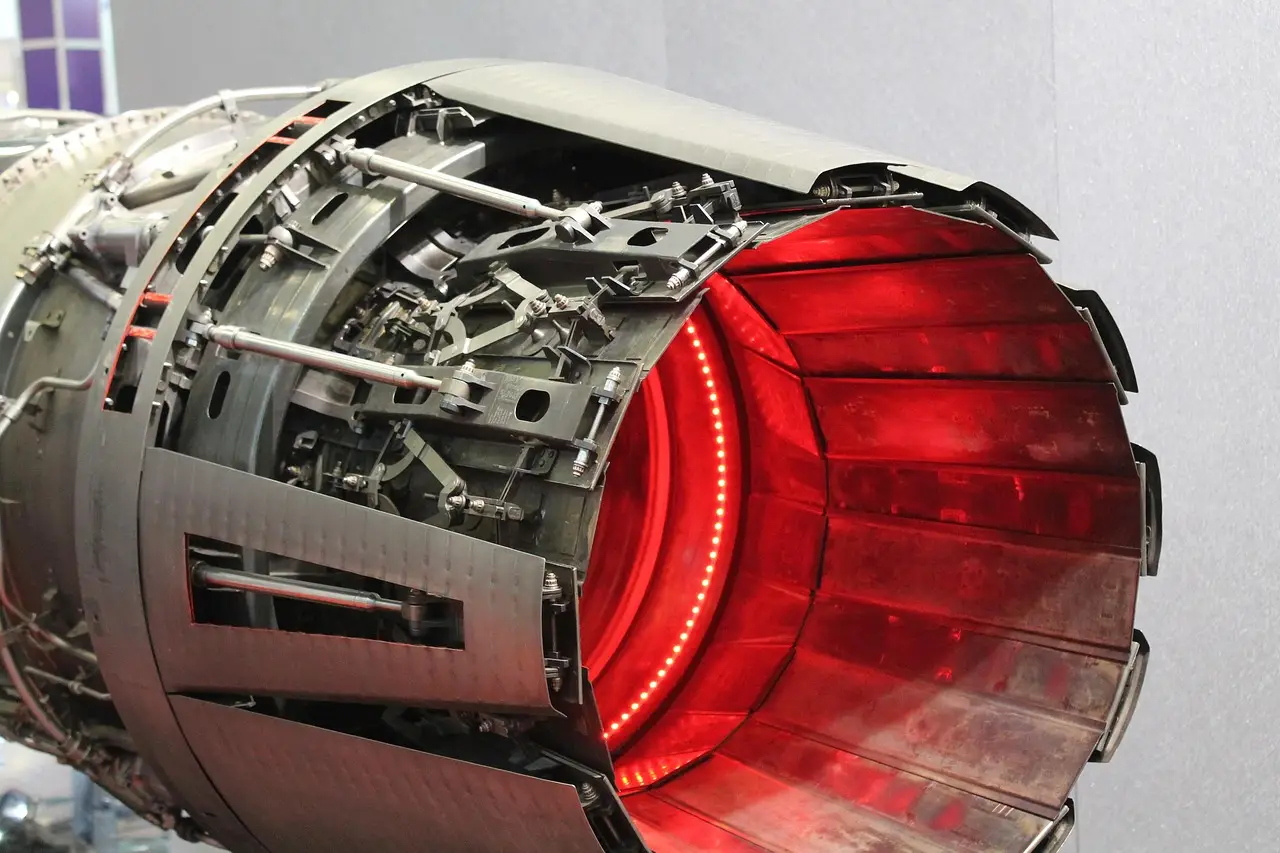
FTAI Aviation holds contracts to deliver more than 100 CFM56-based generators to customers in the US and Canada in 2027 and 2028, a volume that signals a new outlet for engines retired from the world's most widely flown commercial aircraft families. The economics are stark: an old engine pulled from a Boeing 737 or Airbus A320 can now be worth more as a generator for an AI data center than a parts dealer could recover by selling its components piece by piece.
The mechanism is simple. AI data center developers can wait years for a grid connection while racing to bring computing capacity online. A converted jet engine produces electricity on site, letting servers run far sooner than a utility hookup would allow.
FTAI, a New York-based engine repair and leasing company, calls its generator the Mod-1. In tests at its Miami facility, the unit met targets of 23 megawatts of continuous power and 25 megawatts at peak output, running on both natural gas and liquid fuel.
What does this change for airlines and lessors?
It changes who bids for an engine at retirement. FTAI Chairman and CEO Joe Adams told investors the power business targets CFM56s otherwise headed for disassembly. "They're worth more to us than they're worth in the secondary market for part value," he said.
The money is already substantial. In July 2026, an unnamed cloud computing company placed a $1.465 billion order through J&F Power Systems, FTAI's joint venture with Jereh Group, with deliveries expected in batches through November 2027.
The pull is visible at the boneyard level too. At Pinal Airpark in Arizona, where commercial aircraft are stored and dismantled, Nikki Thomas of Ascent Aviation Services told The New York Times that inquiries from energy developers had picked up over the past year. The newspaper also reported that xAI, Elon Musk's AI company, has installed eight converted aircraft turbines in Mississippi, citing state permits and satellite imagery.
Aviation specialists now face new competition for the same hardware. AerFin, a UK-based aircraft and engine specialist, bought three CFM56s for teardown and found enough usable hardware to put one back into service. Technicians at its South Wales facility took two serviceable modules (self-contained engine sections) from one engine and installed them in another. That kind of module harvesting keeps aircraft flying — but now competes directly with generator conversions.
FTAI plays both sides. Under an agreement announced in October 2026, it supplies United Airlines with a serviceable CFM56-7B ahead of a scheduled engine removal, then buys the engine United takes off the wing. United gets a replacement without waiting for an overhaul; FTAI then decides whether the usable parts are worth more in another aircraft or in a Mod-1.
Is this new technology?
Not entirely. Power companies have used aircraft engines for years. Missouri-based ProEnergy developed its PE6000 with a European utility, starting from the core of a GE CF6-80C2, an engine flown on the Boeing 747. ProEnergy overhauls the core and fits power-generation components. By 2023, one of its turbines had logged 750 hours at a Houston generating facility. What has changed is the buyer: data center developers, not utilities, are now driving demand.
Boom Supersonic sees an even earlier payoff from the same logic. The Colorado company is developing one new turbine core for two products: Symphony, the engine intended for its Overture airliner, and Superpower, a 42-megawatt natural gas turbine for AI data centers. In October, Boom completed the first prototype core for both programs and plans to fire it up at its Colorado test site next.
Boom already has a ground-power customer. AI infrastructure company Crusoe has ordered 29 Superpower units, with first deliveries targeted for mid-2027. The airliner schedule is less certain. United Airlines has agreed to buy 15 Overtures if they meet its requirements, but CEO Scott Kirby said in an October 2026 interview that Boom would miss its 2029 entry-into-service target. "It's not going to happen in '29. It's going to take longer," Kirby said.
The pattern is now clear: demand for ground-based turbine power is arriving years ahead of, and independent of, any supersonic passenger service.
via nytimes.com (Original)
More from Sophie Lindqvist
Show full bio
Senior reporter covering people, launches and day-to-day practice in Commercial aviation industry coverage at Flightdeck Report.
565 articles
Same bay
- FDR115FTAI Aviation buys 27 Boeing 737-700s as WestJet exits type · September 28, 2026
- FDR197PW1100 Stands Hit 95% Utilization as Fall Maintenance Peak Nears · October 19, 2026
- FDR943Lufthansa Group Sends CFM56 Work to FL Technics Kaunas Shop · October 12, 2026
- FDR870Georgia Aviation and Agriculture Leaders Form New SAF Research Group · October 2, 2026
- FDR470Lufthansa Technik to Nearly Double Tulsa Engine Shop Capacity · October 30, 2026