Clearance CLR-9939 · SAF372
SAFRUS
Safety & OperationsClearance sheet
Russian Firm Patents Wheeled Barrier to Shield Airfields From Drones
Barometer has patented a wheeled, modular metal-plate barrier to protect parked aircraft and crews from drones, per TASS. Rosoboronexport paired physical protection with its Anti-Drone Dome at the Russia-Africa Summit.
Read-back
- Barometer has patented a wheeled barrier to protect airfields and servicing personnel from UAV attacks, per TASS
- Each protective module contains three to four metal plates; barriers can link into a continuous defensive line
- The barrier operates in two positions at different heights and carries panels shielding its wheels from impacts
- Rosoboronexport exhibited its Anti-Drone Dome at the Russia-Africa Summit in Moscow last month
- The Dome pairs Pantsir-SMD-E, Pantsir-S1M, Verba MANPADS, TKB-1167 and Citadel systems with electronic and physical countermeasures
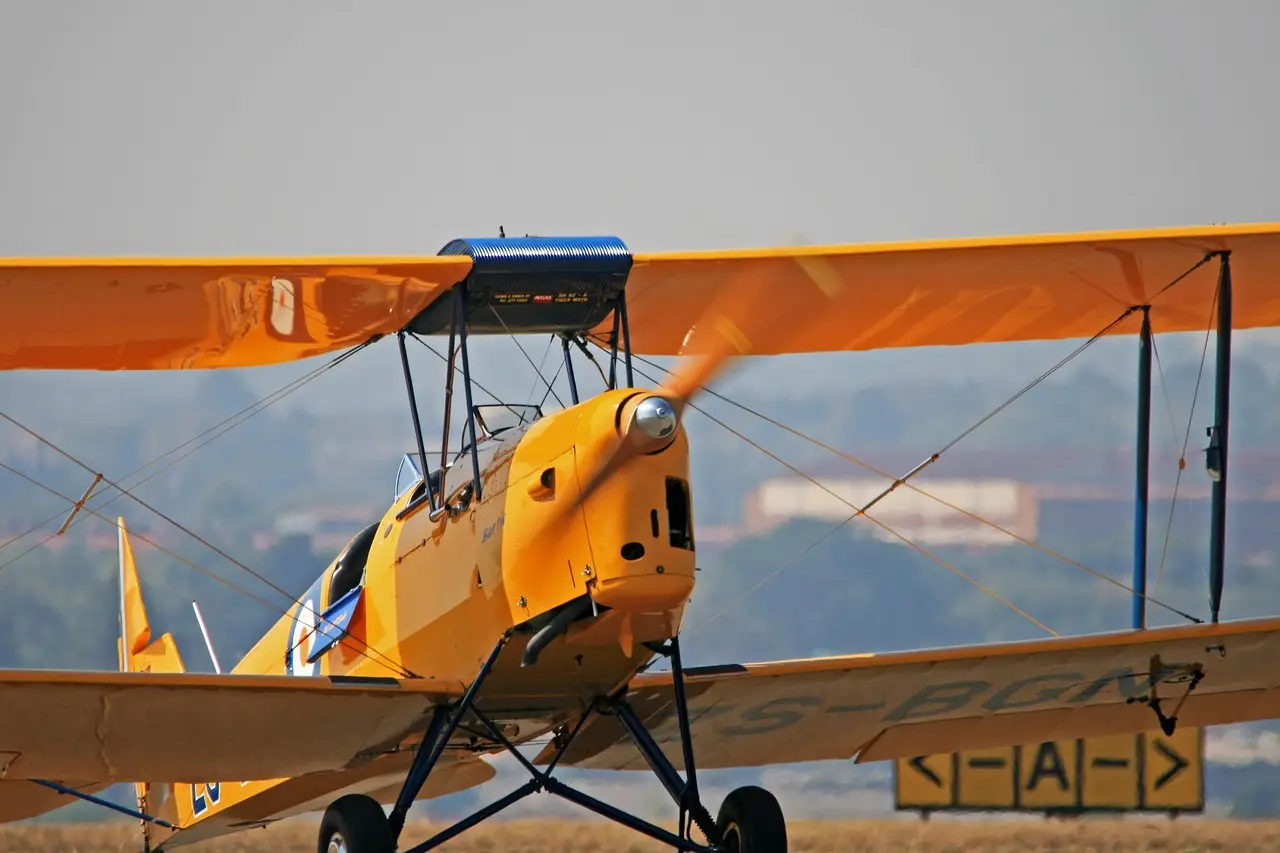
Russia's Barometer company has patented a wheeled barrier intended to protect airfields from unmanned aerial vehicle attacks, according to the state news agency TASS. The filing, registered as a utility model, arrives as Russian military and civilian airfields face sustained drone threats, and as Russian state industry markets layered counter-UAS packages abroad.
The patent description frames the device plainly. "The technical solution proposed as a utility model relates to airfield equipment and is intended to protect both the aircraft and the personnel servicing them," it states. In other words, this is ground hardware, not a radar or a missile. The barrier exists to stand between a hostile drone and an asset that cannot move quickly — a parked aircraft, or a crew working on an apron.
What does the design actually involve?
According to TASS, the barrier combines wheels for mobility with protective panels that shield those same wheels from external impacts. The logic is straightforward: a mobile barrier that loses its wheels is no longer mobile. The frame carries a protective covering built from modules, each containing three to four metal plates.
The system works in two positions at different heights, the patent description indicates. That dual configuration suggests a single line of hardware can be adapted to varying threat profiles or terrain. TASS reports that the mobile barriers can be connected to form a continuous line of defence — the difference between a series of shields and an actual perimeter.
A patent, of course, is a claim of invention, not evidence of deployment. No production timeline, unit cost, or operator was named in the reporting. What the filing does show is where Russian engineering effort is going: toward physical, passive protection that requires no operator, no radar picture, and no munitions.
How does it fit the wider counter-drone effort?
The barrier does not stand alone. Last month, Russia's state arms exporter Rosoboronexport — part of the Rostec State Corporation — exhibited its Anti-Drone Dome at the Russia-Africa Summit in Moscow. TASS described it as "a multi-layered system comprising airspace reconnaissance capabilities, firepower capabilities, and electronic countermeasures against UAVs, a geoinformation system based on an automated control system, as well as engineering (physical) protection measures."
The Dome's kinetic layer draws on established Russian hardware, as itemized by TASS:
- The Pantsir-SMD-E air defence missile system
- The Pantsir-S1M air defence missile and gun system, both developed by the High Precision Systems Holding Company
- The Verba man-portable air defence system (MANPADS)
- The TKB-1167 air defence system
- The Citadel anti-aircraft artillery system with programmable-detonation ammunition, developed by Rostec
The pairing matters. An export catalogue that runs from Pantsir batteries down to a patented wheeled fence offers a customer a full gradient of protection at correspondingly graded prices. The engineering-protection tier — barriers, fences, physical structures — is the cheapest layer, and the one Barometer's new patent now occupies.
For airport operators beyond Russia, the development signals a broader trend: counter-drone defence is increasingly treated as an airfield infrastructure problem, not merely an air defence problem. Physical barriers require no spectrum allocation, no integration with air traffic control, and no treaty-sensitive technology. Whether Barometer's design reaches serial production, or remains a paper utility model, will be the measure of its worth.
via unmannedairspace.info (Source)
More from Grace Kim
Show full bio
News editor covering companies, deals and strategy in Commercial aviation industry coverage at Flightdeck Report.
640 articles
Same bay
- FDR356MyDefence Launches AI-Powered Wearable Drone Detector Wingman Edge · October 10, 2026
- FDR555EASA Certifies Anti-Missile Suite on Bombardier Global 7500 · October 14, 2026
- FDR602AIDC Runs Counter-Drone Drill to Extend Infrastructure Airspace Cover · September 30, 2026
- FDR957Tactien Group launches independent C-UAS evaluation tool · October 10, 2026
- FDR605Echodyne EchoShield Radar Now Feeds BAE Systems' BATS Counter-Drone Architecture · November 11, 2026