Clearance CLR-6648 · AIR603
AIRTHR
Airspace & RegulationClearance sheet
Three Lost Comets: How 1950s Disasters Wrote Today's Certification Rules
Three Comets lost within a year of entry into service forced the fatigue and pressurisation testing that now governs certification of every pressurised airliner flying today.
Read-back
- Three Comets were lost in prominent accidents within a year of the type's 1952 entry into service.
- The prototype G-ALVG first flew on 27 July 1949 from Hatfield, a 31-minute flight to 10,000 feet.
- The first jet passenger service flew G-ALYP to Johannesburg on 2 May 1952 with 36 passengers.
- The Comet 4 entered service in 1958 after a structural redesign; the Nimrod derivative served the RAF until 2011.
- Full-airframe pressurisation cycle fatigue testing, now standard at FAA, EASA and CAA, traces directly to the Comet investigation.
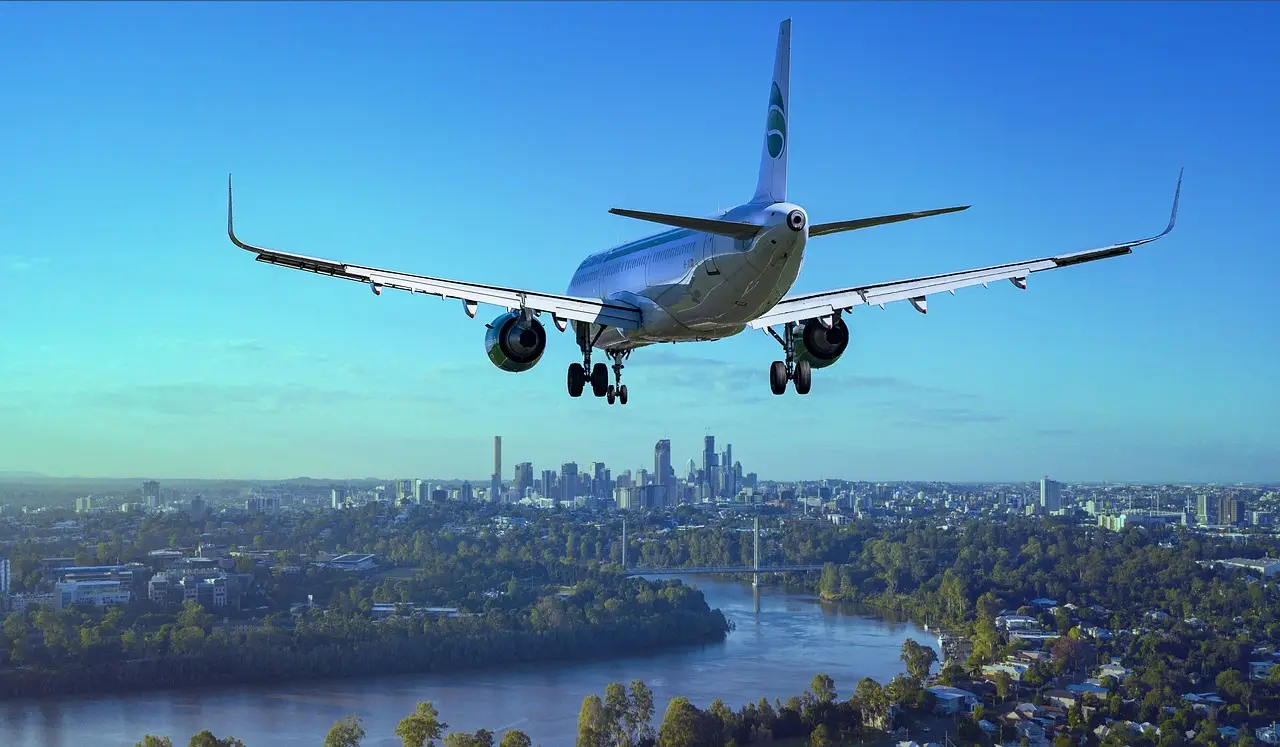
Three de Havilland Comets were lost in widely reported accidents within a year of the type entering service — a run of disasters that produced the structural and certification requirements still underpinning airworthiness regulation at the FAA, EASA and CAA today.
The programme that nearly ended the jet age before it properly began had started in triumph. The Comet prototype, registered G-ALVG, first flew from Hatfield Aerodrome on 27 July 1949, a flight lasting about 31 minutes that reached 10,000 feet. John Cunningham, de Havilland's chief test pilot, later recalled to Smithsonian Magazine that the aircraft felt "very promising. Very quick."
Less than three years later, on 2 May 1952, the world's first pure jet commercial passenger service departed for Johannesburg. Captain Michael Majendie flew G-ALYP with 36 passengers, six crew and 30 bags of mail aboard, according to Smithsonian Magazine's account.
What made the Comet extraordinary in 1952?
The machine justified the crowds. Smithsonian Magazine reports it cruised at 35,000 feet at 460 mph — more than 100 mph faster than the fastest propeller airliner then flying.
Spectators turned out in numbers the crews themselves barely registered. Captain R. C. Alabaster, a Comet pilot, recalled: "Oddly enough, as we circled the airport we could see all these cars and people blocking the roads, and we thought it just must be busy. It wasn't until after we landed that we learned they had come to see us."
How did the programme come apart?
The acclaim did not survive contact with operations. According to Aerossurance, G-ALYV was lost in a severe thunderstorm, with the Court of Inquiry attributing the crash to structural failure caused by severe gusts or pilot overcontrolling. Across the sequence as a whole, Aerossurance and Wikipedia record three Comets brought down in prominent accidents within a year of entry into service.
That run forced investigators and regulators to scrutinise the airframe far more rigorously than any certification process had previously demanded. Wreckage recovery and analysis reframed how engineers and regulators thought about structural integrity at altitude.
What did the investigation find?
The findings pointed to design shortcomings, Wikipedia reports — among them acute stress concentrations at the corners of square cut-outs for ADF antenna windows. That geometry meant cyclic pressurisation loads, repeated every flight as the cabin inflated and deflated, concentrated stress at the corners and accelerated crack propagation far beyond what pre-service testing had detected.
In plain terms, this was metal fatigue driven by repeated pressurisation cycles. The Comet flew higher than any airliner before it, which meant a larger pressure differential between cabin and atmosphere and a correspondingly greater structural load on every sector. The testing regime of the early 1950s had not been designed for that combination.
The consequence was a wholesale re-examination of how pressurised fuselages were certified. Fatigue testing of the complete airframe under repeated pressure cycles became a central certification requirement rather than an afterthought.
What survived the redesign?
De Havilland did not abandon the programme. Wikipedia reports the aircraft underwent a thorough redesign incorporating significant structural strengthening, culminating in the Comet 4 — a variant that entered service in 1958 and flew commercially until 1981. The lessons went in from the outset: oval windows to distribute stress, thicker skin, and a certification approach informed by what the accidents had revealed.
The influence extended well beyond de Havilland. The requirement that airframes undergo repeated pressurisation cycle testing before certification — now embedded in the airworthiness standards applied by the CAA, EASA and FAA — traces its direct lineage to the Comet investigation. Every widebody flying today has been tested across tens of thousands of simulated pressurisation cycles before a single passenger boards.
The design also proved durable in a second life. Wikipedia records that the Hawker Siddeley Nimrod, a maritime patrol derivative, remained in RAF service until 2011 — more than six decades after G-ALVG's first flight from Hatfield.
Why it still matters
Aviation safety advances almost entirely through investigation and reform rather than foresight. The Comet accidents remain the clearest example in commercial aviation history of a catastrophic structural failure producing regulatory change that persisted for generations. The pressurised fuselage on every aircraft in service today is certified against standards whose origins lie in what went wrong in 1953 and 1954.
The window geometry on your next flight, the pressurisation cycle testing in its certification file and the fatigue life limits its operator maintains all carry the Comet's imprint — a sobering legacy for an aircraft that first flew just 31 minutes over Hertfordshire in the summer of 1949.
via theaviationhub.co.uk (Source)
More from Nathan Brooks
Show full bio
Correspondent covering technology and product news in Commercial aviation industry coverage at Flightdeck Report.
646 articles
Same bay
- FDR557BOAC's Comet 4 Crossed the Atlantic First — Pan Am's 707 Won the Market · November 14, 2026
- FDR295COMAC's CE-25A electric aircraft completes first piloted flight in China · November 15, 2026
- FDR989NTSB Finds Evidence of In-Flight Breakup Before Florida Learjet 60 Crash · November 2, 2026
- FDR620Cockpit recorder shows Amazon Air crew called go-around seconds before fatal Miami overrun · September 30, 2026
- FDR967Three Dead in Midair Helicopter Collision Near Oregon Airport · October 31, 2026