Airspace & RegulationClearance sheet
FAA router fault grounds 12,000 flights in four-hour nationwide halt
An overloaded router during an L3Harris upgrade triggered the November 13 FAA ground stop, held nearly 3,500 departures and contributed to the loss of about 12,000 flights.
Read-back
- The 13 November FAA ground stop ran from 3:54 p.m. to 8:15 p.m. Eastern.
- Nearly 3,500 departures were held, and about 12,000 flights were lost over Friday and Saturday.
- Communications were affected at 17 of 22 en route centres, while more than 3,000 airborne aircraft landed safely.
- The router sent about 1,000 connection attempts every four to five seconds; the FAA disabled functions on more than 60 similar routers.
- The Modern Skies Act seeks $30 billion, while Duffy's post-stop request rose to $50 billion.
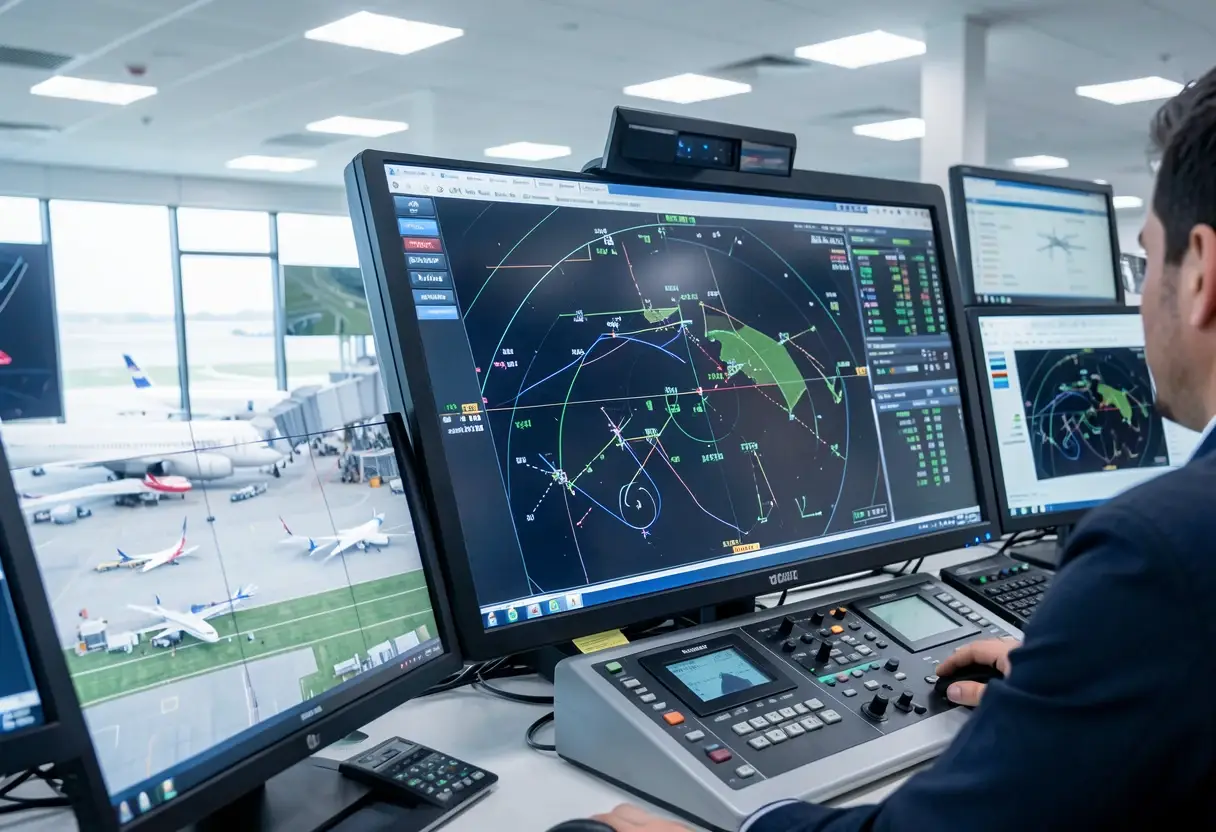
The FAA stopped new airline departures nationwide for 4 hours 21 minutes on 13 November, holding nearly 3,500 scheduled departures as about 12,000 flights were lost across Friday and Saturday. It was only the third nationwide halt in American aviation history, and its effects reached Europe.
The order ran from 3:54 p.m. to 8:15 p.m. Eastern, affecting communications at 17 of 22 FAA en route centres that handle aircraft at cruising altitude. More than 3,000 airborne aircraft landed safely; European flights for the United States were suspended overnight at the FAA's request, and Heathrow cancelled 29 US flights the next morning.
What caused the shutdown?
Six days after the shutdown, investigators were pointing to a router, not a cyberattack or radar failure. L3Harris, the contractor running the FAA's telecommunications network, was replacing copper lines with fibre-optic cable at a remote site in southern Arkansas.
The new router began sending about 1,000 connection attempts every four to five seconds, overloading older equipment across the network carrying air traffic control communications. Transportation Secretary Sean Duffy said: “Once we were able to isolate the work being done at this location, all of our systems came back online.”
Officials have ruled out a cyberattack, and the FAA has disabled specific broadcasting functions on more than 60 similar routers. Duffy said the government would “hold people accountable.” FAA Administrator Bryan Bedford, however, said the router explains how the failure began, not why the wider network was vulnerable.
Why did one router cause a national halt?
The reason lies partly in an unfinished transition. The FAA had completed about 70%, roughly seven in ten, of its copper-to-fibre conversion, leaving old and new equipment operating together when the network broke.
Much of the infrastructure still relies on ageing equipment and copper lines being replaced piece by piece, while the agency is short of several thousand controllers. A small fault therefore met a network able to spread it widely, although Bedford said the full vulnerability remains unexplained.
What will modernization cost?
The episode has made an existing funding argument more urgent. Congress approved $12.5 billion for ATC modernisation last year, and the FAA has used it for new radios, fibre-optic links and surface surveillance; the failed upgrade sat inside that broader programme.
In September, Senator Eric Schmitt introduced the Modern Skies Act, seeking another $30 billion in three equal $10 billion allocations: digital ATC systems, airport infrastructure including towers and runways, and grants for mid-sized airports. Nearly 60 aviation groups back the bill, including the controllers' and pilots' unions.
After the ground stop, Duffy raised his request to $50 billion. Critics argue the Modern Skies Act is the wrong vehicle, while the Reason Foundation estimates only about 40%—two-fifths—would go to ATC itself; Democrats have called for hearings and investigations.
How hard will the disruption hit Thanksgiving travel?
US airlines expect around 29 million passengers over the Thanksgiving period, with 29 and 30 November the busiest days. The FAA says it has isolated the faulty equipment and sees no sign of a repeat, but the upgrade continues and a single point of failure remains exposed.
Passengers should book early departures, avoid tight connections and know their rights if flights are cancelled. That is modest advice for a four-hour national stand-down, but it reflects the continuing risk while the network upgrade proceeds.
Can a similar shutdown happen again?
The immediate trigger appears contained, but containment is not modernisation. The fault was neither an attack nor a storm; it was a relatively simple router problem that the network could not keep local—a reassuring diagnosis that also exposes the design weakness.
Unless the FAA completes the transition and removes fragile single points of failure, the United States remains exposed to small failures with large consequences. The next pressure point arrives during the Thanksgiving rush, when airlines expect around 29 million passengers across the holiday period, and any faster investment depends on Congress.
via theaviationhub.co.uk (Source)
More from Grace Kim
Show full bio
News editor covering companies, deals and strategy in Commercial aviation industry coverage at Flightdeck Report.
692 articles
Same bay
- Over 6,400 US Flights Cancelled Saturday After FAA Ground Stop · November 15, 2026
- FAA Says Router Flood That Grounded US Flights Came From Routine Maintenance · November 16, 2026
- More Than 12,000 Flights Canceled as FAA Outage Probe Points to Aging Router · November 16, 2026
- Four-Hour FAA Ground Stop Grounds Thousands of Flights Nationwide · November 14, 2026
- US Airlines Cancel Over 1,300 Sunday Flights After FAA Ground Stop · November 16, 2026