Safety & OperationsClearance sheet
US nationwide ground stop follows suspected Arkansas router overload
A suspected Arkansas router overload preceded a nationwide US ground stop, stranding or delaying tens of thousands as old ATC equipment and Rex’s Saab costs come into focus.
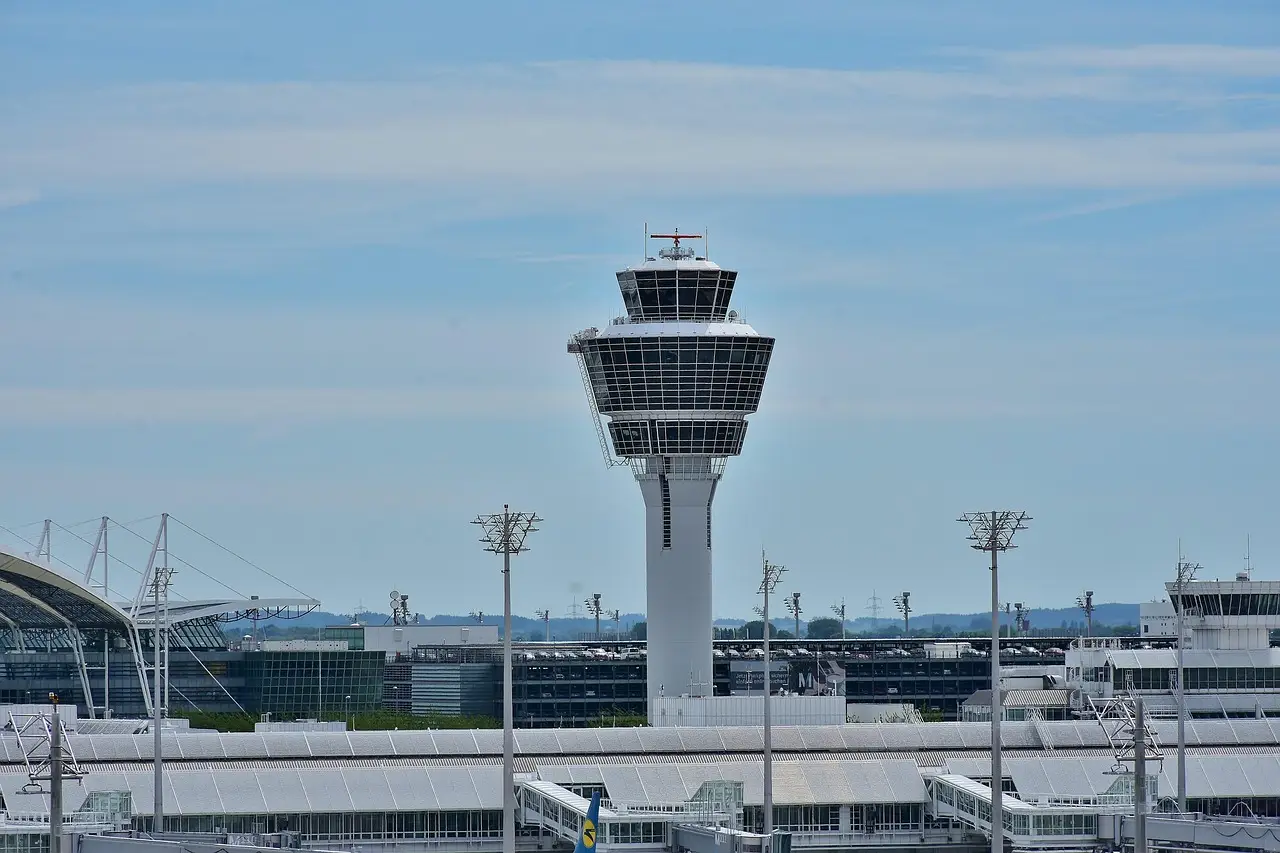
A nationwide ground stop halted flights across the United States on a Friday afternoon, stranding or delaying tens of thousands of passengers after air traffic control centres became unable to communicate.
The immediate cause remains unsettled in the episode summary. Jake and David’s Australian Aviation Podcast video, “Failure to communicate,” describes an “ostensibly” router overload tied to replacement of copper wire somewhere in Arkansas. The qualifier matters. The summary identifies a suspected sequence, but it neither confirms the root cause nor explains how a replacement project could disable communications across an entire national aviation network.
What caused the communications failure?
The episode calls the work “a botched upgrade heard ’round the world” and says attention then turned to the antiquated equipment holding up America’s aviation system. The summary does not identify the exact Arkansas location, router model, installation date, or technical failure mechanism.
- No calendar date appears. The source gives only Friday afternoon.
- No cancellation total, delay duration, airport list, or operational loss estimate is supplied.
- No US carrier, aircraft manufacturer, lessor, MRO, or regulator is named in connection with the disruption.
The response depends on the diagnosis, and the summary does not identify the corrective work. The operational consequence is not in doubt. Control centres could not communicate. The nationwide ground stop halted all flights. Tens of thousands of passengers were stranded or delayed across the country.
That sequence sets up the episode’s larger question: can decades of technical neglect and funding shortfalls be reversed? The framing connects a communications failure with the condition of America’s air traffic control system, but it provides no replacement plan, funding figure, or certification milestone.
Did decades of neglect become visible?
Jake and David use floppy disks and paper strips to examine the inner workings of American air traffic control. The method conveys the age of some of the material they are reviewing, although the summary offers no equipment inventory, modernization schedule, or system-by-system condition report.
The episode places antiquated equipment, a nationwide halt, and decades of neglected investment in one frame, although it does not establish that old hardware caused the immediate overload. It says the outage drew attention to the equipment; it does not identify old equipment as the trigger.
The account also does not separate equipment already operating from systems awaiting replacement or upgrade. No safety certification appears in the review. Nor does the summary supply figures for control-centre staffing, system redundancy, maintenance intervals, or capital spending. Those omissions limit any verdict on how much of the infrastructure remains vulnerable.
For US passengers and carriers, the immediate effects were a halted flight schedule, delays, and stranded travellers. The source does not convert those effects into a monetary loss. The longer financial question depends on whether technical work and new funding can reverse decades of neglect, precisely the problem the episode raises.
What does this change for regional passengers?
The episode then shifts from US infrastructure to Australian regional aviation. Rex remains focused on getting its Saabs back into the air amid high operating costs. The summary presents this as an operating challenge, not a completed fleet recovery.
This is a different test from the US ground stop. The first concerns a national network losing communications capacity. The second concerns one airline restoring aircraft availability while controlling the cost of doing so. Saab is the only aircraft brand named, and Rex is the only airline.
- No fleet count or utilization rate accompanies the Saab discussion.
- No dispatch-reliability figure, maintenance backlog, or return-to-service date is provided.
- No lease expense, operating-cost amount, or regulator certification milestone appears.
- The source makes no Saab delivery or performance claim against which to test a backlog or delivery record.
Those omissions prevent a defensible verdict on regional aviation’s sustainability. For an Australian regional passenger, the practical issue is not whether a podcast can settle national infrastructure policy, but whether limited usable aircraft can be restored without worsening already high operating costs.
The episode identifies communication fragility in the United States and fleet-cost pressure in Australia. It does not demonstrate how quickly either can be fixed. It also offers no completed answer to whether decades of neglect can be reversed, or whether regional operators can sustain their aircraft networks.
The evidence supports caution about causal language. The Arkansas trigger remains qualified in the source. The scale of the US disruption does not. The Rex operating-cost problem is stated. The path to restoring its Saab operations remains unspecified.
Progress will be measurable only if the full account identifies the US failure’s cause and Rex reports when its Saabs return, at what cost, and with what operational effect.
via australianaviation.com.au (Source)
More from James Calloway
Show full bio
Staff writer covering people, launches and day-to-day practice in Commercial aviation industry coverage at Flightdeck Report.
726 articles
Same bay
- Four-Hour FAA Ground Stop Grounds Thousands of Flights Nationwide · November 14, 2026
- Over 6,400 US Flights Cancelled Saturday After FAA Ground Stop · November 15, 2026
- FAA Chief Says US Flights Back to Normal Sunday After Outage · November 15, 2026
- FAA Grounded All US Flights for 4½ Hours After Contractor Upgrade Failed · November 15, 2026
- More Than 12,000 Flights Canceled as FAA Outage Probe Points to Aging Router · November 16, 2026