Clearance CLR-1940 · AIR883
AIRFAA
Airspace & RegulationClearance sheet
FAA Halts All US Departures After Telecom Outage Hits Air Traffic Control
A telecommunications outage at air traffic control centers triggered the second full US ground stop since 9/11, delaying nearly 10,000 flights and renewing calls for infrastructure funding.
Read-back
- More than 9,900 flights were delayed and about 900 canceled across the US by 2:30 p.m. on Friday.
- The stop is the second full nationwide ground stop since September 11, 2001; the 2023 precedent lasted about 90 minutes.
- Congress recently dedicated $1.9 billion to replace aging air traffic control facilities; no new ARTCC has been built since the Johnson administration.
- Homeland Security Secretary Markwayne Mullin said there was no indication of a national security threat or nefarious attack.
- Controllers at Chicago Center reported losing all frequencies and automation for handoffs and strips.
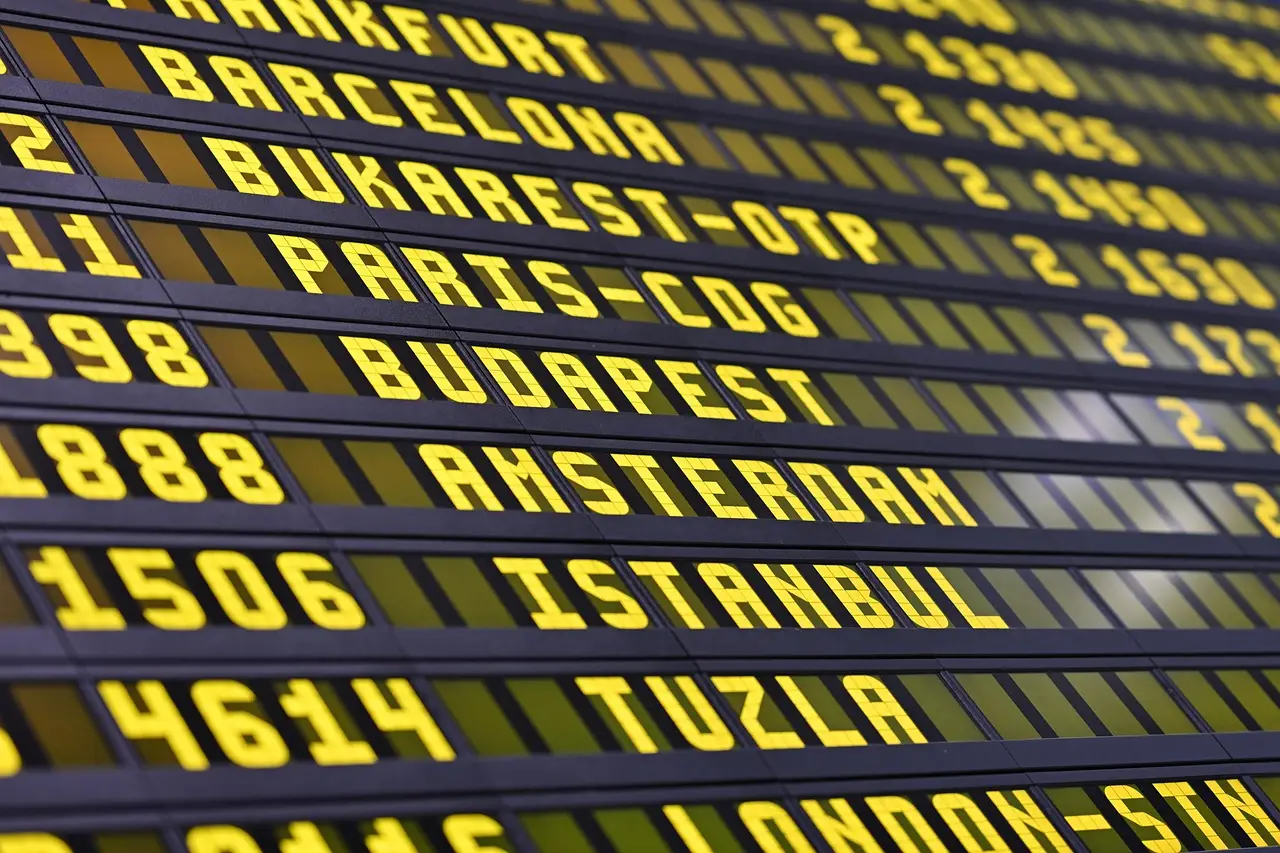
The Federal Aviation Administration stopped every departing flight in the United States on Friday afternoon after a telecommunications outage struck air traffic control centers, producing more than 9,900 delays and roughly 900 cancellations by 2:30 p.m. It is only the second full nationwide ground stop since the September 11, 2001 attacks.
The FAA advisory was unambiguous. "Due to extraordinary circumstances and for reasons of safety," it read, "all departing traffic should remain ground stopped until further notice." Inbound international flights, the agency added, would be handled "on a case by case basis."
The previous full stop, in 2023, lasted about 90 minutes after a pilot notification system failed. This one ran longer. At Denver International Airport, a controller told pilots the stop was expected to hold until 9 p.m. local time, more than six hours after it began.
Was it an attack?
Homeland Security Secretary Markwayne Mullin said no. "There is no indication that we've had, no reason to believe, that as of right now this was a threat to the United States," he told reporters at the White House. He later repeated that there was "no indication as of yet that this was a nefarious attack against us."
Mullin, who confirmed the cause was a telecommunication outage, also said he did not believe it was tied to Thursday's Microsoft Outlook outage. Speculation on ATC radio channels in San Diego suggested otherwise, but the controller there could not confirm any cause.
The technical picture is sobering. In audio from Chicago Air Route Traffic Control Center, a controller reported that the facility had "lost all frequencies and automation for handoffs and strips" — the systems that transfer flights between towers and track each aircraft electronically. A pilot in San Diego, told of the stop on the runway, replied: "That's a joke, right?" It was not.
What does it mean for infrastructure spending?
Republican staff of the Senate Commerce Committee, which oversees the FAA, wrote on X that the outage underlined the need to modernize air traffic control centers. Congress recently passed legislation dedicating $1.9 billion to replace aging facilities. "No new ARTCC has been built since LBJ was in office," the staff wrote — meaning no new Air Route Traffic Control Center since the Johnson administration.
The timing is awkward. Days earlier, the FAA announced it would roll out an artificial intelligence tool nationwide to help avoid delays. The platform, Strategic Management of Airspace, Routes, and Trajectories, known as SMART, is a cloud-based system billed as a shared, data-driven view of the national airspace. Mullin said officials are examining any links between the new system and the stoppage.
Sen. Tammy Duckworth of Illinois, the ranking Democrat on the Aviation, Space and Innovation Subcommittee, promised scrutiny. "The safety of our skies is built on redundancies. Whatever led to the nationwide ground stop will warrant a thorough and complete investigation," she said in a statement.
How are airlines and airports coping?
The disruption fell unevenly but widely. At Los Angeles International Airport alone, more than 550 flights were delayed and 47 canceled. California's Office of Emergency Services contacted federal and state officials to assess the impact on the state's airports, Governor Gavin Newsom's press office said.
American Airlines said flights already airborne would continue to their destinations. "We expect disruption to our schedule for the rest of the day, depending on the length of the FAA's nationwide ground stop," a spokesperson said. "It will be all hands on deck across American to get customers on their way as soon as possible when the FAA lifts this ground stop." United and Delta posted passenger advisories and rebooking links on their websites.
On the ground, the mood stayed mostly civil. Dylan Schroeder, 37, boarded a flight in Charlotte around 3:45 p.m. Eastern, bound for Orlando, before the pilot announced air traffic control system issues. After just over an hour, passengers deplaned. The mood, the Baton Rouge resident said, was decent "considering the circumstances," though several Disney World-bound travelers looked disappointed.
The investigation Duckworth demands will have to establish whether a single telecommunications fault can still ground the world's largest aviation market for the better part of a day.
via x.com (Original)
More from Grace Kim
Show full bio
News editor covering companies, deals and strategy in Commercial aviation industry coverage at Flightdeck Report.
608 articles
Same bay
- FDR858Telecom Outage Halts All U.S. Departures as FAA Radar and Radio Links Fail · November 14, 2026
- FDR572FAA orders nationwide ground stop after all en route centers lose comms · November 14, 2026
- FDR651FAA Nationwide Ground Stop Halts US Departures, Cancels Nearly 5,000 Flights · November 14, 2026
- FDR419US Grounds All Flights for Four Hours as Legacy ATC Comms Fail · November 14, 2026
- FDR203FAA Lifts Nationwide Ground Stop After Four-Hour Communications Failure · November 14, 2026