Clearance CLR-2748 · AIR561
AIROVE
Airspace & RegulationClearance sheet
Over 2,300 Flights Cancelled After FAA Ground Stop as Recovery Extends Into Monday
Over 2,300 flights cancelled and 8,000 delayed after the Nov. 13 FAA ground stop, as Duffy blames L3Harris work and the White House seeks $50 billion in emergency funding.
Read-back
- More than 2,300 flights cancelled and over 8,000 delayed as of Sunday after the Nov. 13 nationwide ground stop.
- Duffy blamed faulty maintenance by L3Harris during a copper-to-fiber conversion; a radar site in Amarillo, Texas and a radio site in El Dorado, Arkansas are suspected.
- The White House requested $50 billion in emergency funding; Congress approved $12.5 billion in 2025, of which only $1 billion has been spent.
- L3Harris says more than 70% of the planned airspace communications conversion to fiber is complete.
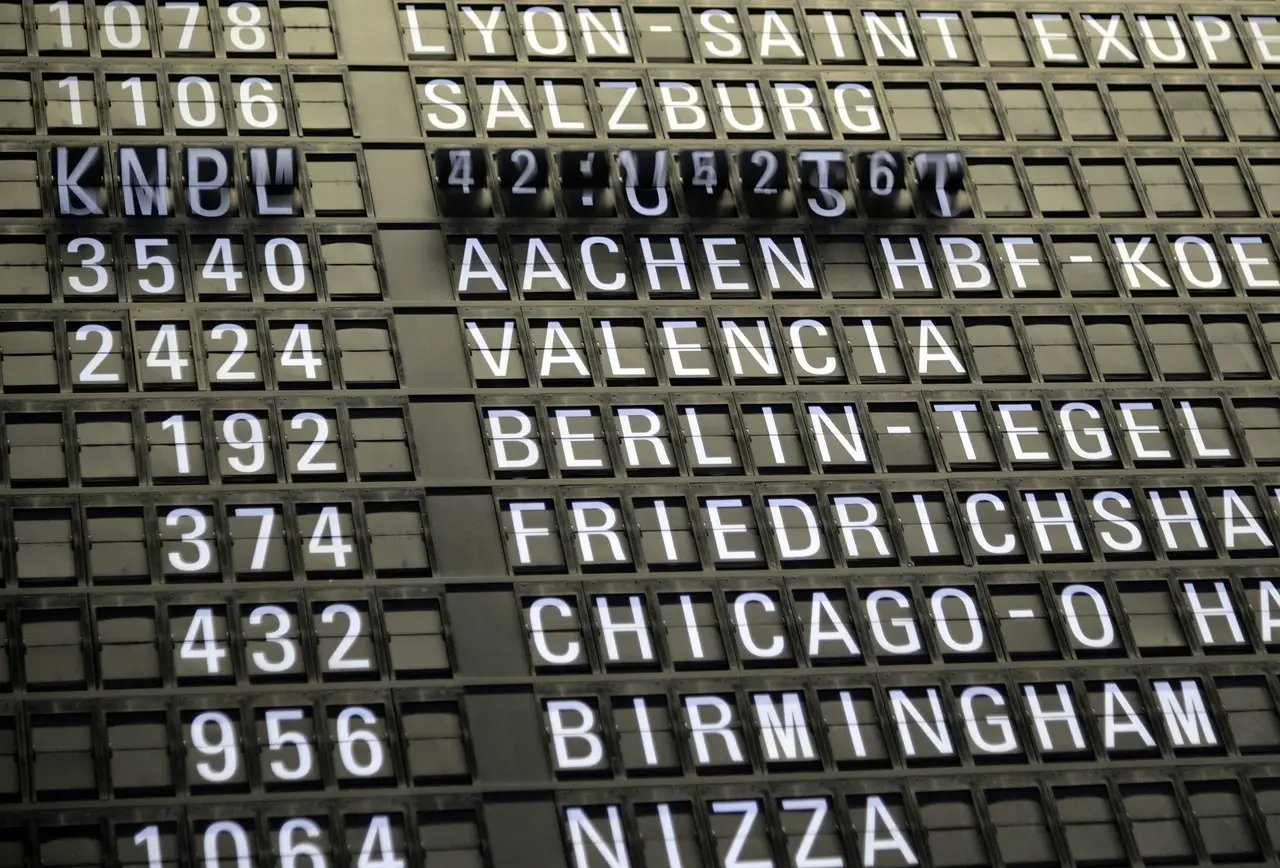
More than 2,300 flights have been cancelled and more than 8,000 flights within, into or out of the US were delayed as of Sunday evening, according to FlightAware, three days after a nationwide ground stop shut the national airspace system on Nov. 13. Dallas-Fort Worth and Atlanta led the delay counts, each logging more than 250 flights. Airlines were still rebooking thousands of stranded passengers, with disruption expected to persist into Monday.
U.S. Transportation Secretary Sean Duffy said Sunday: "By the end of today, end of tomorrow, I think we will be back to normal." Speaking on NBC's Meet the Press, he explained the mechanism behind the slow recovery: "What happens when you have a ground stop like what happened on Friday is we have airplanes and air crews that are out of position. It takes some time for the airlines to re-choreograph all of their crews and aircraft."
What caused the ground stop?
Duffy on Saturday blamed faulty maintenance by L3Harris Technologies, a federal contractor, for the nationwide stop. L3Harris was replacing two sections of old copper wire with new fiber-optic cable when the FAA's legacy equipment became overloaded and disrupted communications.
"The initial investigation indicates that two potential locations as the reason for the excessive data flooding the systems: a radar site in Amarillo, Texas and a radio communications site in El Dorado, Arkansas," Duffy said.
L3Harris responded on Saturday, saying it takes the ground stop and its impact "seriously." In a statement, the company said: "With safety and reliability as our highest priorities, L3Harris, together with its telco partners and the FAA, has completed more than 70% of the planned airspace communications conversion from legacy copper wires to a fiber optic system. We are supporting the FAA in its investigation to understand the conditions that led to the Nov. 13 ground stop of our nation's air travel."
What does this change for air traffic control funding?
President Trump on Sunday called on Congress to approve more funding for air traffic control modernization. "We have already started the work, but it should be done all at once, not in drips and drabs. Congress must approve," Trump wrote on social media.
The money at issue is substantial. In 2025, Congress approved $12.5 billion for air traffic control safety system upgrades under Trump. On Friday, Duffy and the White House went further, requesting $50 billion in emergency funding.
"We have to make investments into a network that has been neglected for decades," Duffy said on Meet the Press. "We need to put money into it to make sure that it's still resilient for the future."
Two Democrats on the House Transportation and Infrastructure Committee challenged that request with spending data of their own. Rep. André Carson of Indiana and Rep. Rick Larsen of Washington state noted that billions have been appropriated but only a fraction disbursed.
"Congress approved $12.5 billion for the Department of Transportation to make necessary safety upgrades to our air traffic control system," Larsen and Carson said in a Saturday statement. "Fifteen months later, the administration's obligated $4.3 billion but only spent $1 billion, leaving $8 billion unobligated and $11 billion unspent. Explain to Congress, again, why they need more money?"
The dispute frames the practical question now before lawmakers: whether the bottleneck is appropriations or execution.
Controllers worked through the shutdown on aging equipment
Nick Daniels, president of the National Air Traffic Controllers Association, told NPR on Sunday that he supports every effort to understand what led to Friday's ground stop and to verify that policies, practices and mitigation plans were followed.
He credited the controllers themselves for managing the shutdown. "It's one of those moments that nobody can be prepared for, nobody can plan for," Daniels told NPR. The episode, he said, shows what controllers can do when an entire national airspace system is shut down while they work on unreliable equipment.
With more than 2,300 cancellations still being worked through airline schedules, the FAA investigation focused on Amarillo and El Dorado, and a $50 billion funding request now before Congress, the Nov. 13 ground stop is set to shape both the FAA's infrastructure program and the political fight over its pace in the weeks ahead.
via feeds.npr.org (Source)
More from Sophie Lindqvist
Show full bio
Senior reporter covering people, launches and day-to-day practice in Commercial aviation industry coverage at Flightdeck Report.
646 articles
Same bay
- FDR408FAA Grounded All US Flights for 4½ Hours After Contractor Upgrade Failed · November 15, 2026
- FDR712FAA lifts nationwide ground stop after telecom failure strands US flights · November 14, 2026
- FDR490FAA Chief Says US Flights Back to Normal Sunday After Outage · November 15, 2026
- FDR322Over 6,400 US Flights Cancelled Saturday After FAA Ground Stop · November 15, 2026
- FDR728US Airlines Cancel Over 1,300 Sunday Flights After FAA Ground Stop · November 16, 2026